
Ecommerce Website SEO Packages: What to Look For
For an online shop, appearing in search results can help bring products to the attention of people already looking for them. Ecommerce SEO packages provide a structured way to improve a website’s visibility, technical performance and product content. The right package depends on the size of the shop, its platform, the competitiveness of its market and the work already completed.
Packages vary considerably. Some focus on technical fixes, while others include ongoing content, category-page optimisation and digital PR. Understanding what is included makes it easier to compare providers and choose support that suits a business’s goals.
What is an ecommerce SEO package?
An ecommerce SEO package is a set of search engine optimisation services designed for an online shop. It may be offered as a one-off project, a monthly retainer or a combination of both. Typical work covers the website’s structure, product and category pages, technical SEO, content and performance reporting.
Ecommerce SEO has some specific challenges. Shops can have thousands of URLs, similar product descriptions, filtered navigation and products that go out of stock. A good strategy accounts for these issues rather than applying a general SEO checklist.
What should an ecommerce SEO package include?
Technical SEO
Technical work helps search engines access, understand and index useful pages. Depending on the site, this can include reviewing:
- Site speed and Core Web Vitals
- Mobile usability
- XML sitemaps and robots.txt rules
- Canonical tags and duplicate URLs
- Redirects, broken links and crawl errors
- Structured data for products, reviews and breadcrumbs
- Faceted navigation, filters and pagination
For ecommerce websites, filters can generate large numbers of URL variations. These need to be managed carefully so that search engines can focus on the pages that are genuinely useful to shoppers.
Keyword and search intent research
Keyword research identifies the terms people use when looking for products and information. It should also consider search intent: someone searching for a specific product may be ready to buy, while someone asking how to choose a product may need guidance first.
A useful plan maps relevant searches to suitable pages, such as product categories, individual products or buying guides. This helps reduce overlap between pages and gives each page a clear purpose.
Category and product page optimisation
Category pages often target broader searches, while product pages are suited to more specific searches. Optimisation may include improving page titles, headings, descriptions, internal links and image alt text. Product copy should be accurate and useful, not simply rewritten to include keywords.
Where the same products appear across multiple shops, relying entirely on supplier descriptions can make it harder to offer distinctive information. Original details, clear specifications and answers to common customer questions can make product pages more helpful.
Content planning
Guides, comparisons and frequently asked questions can support shoppers who are still researching. An SEO package may include content briefs, editorial calendars or writing support. Content should be relevant to the products and expertise of the business, rather than created solely to target search terms.
Internal linking
Internal links help people move around a shop and help search engines discover its pages. A package may review navigation, breadcrumb links, related products and links from advice content to relevant categories or products.
Reporting and recommendations
Regular reporting should explain what has been done, what has changed and what is planned next. Useful measures may include organic clicks, impressions, rankings, indexed pages, conversions and revenue where reliable tracking is available. Rankings alone do not show the full impact of SEO.
Common types of ecommerce SEO package
SEO audit
A one-off audit can be suitable when a shop needs a clear assessment before committing to ongoing work. It should prioritise findings by impact and effort, explain the evidence behind recommendations and give practical next steps. An audit is most useful when the business has the time or resource to implement the findings.
Foundational package
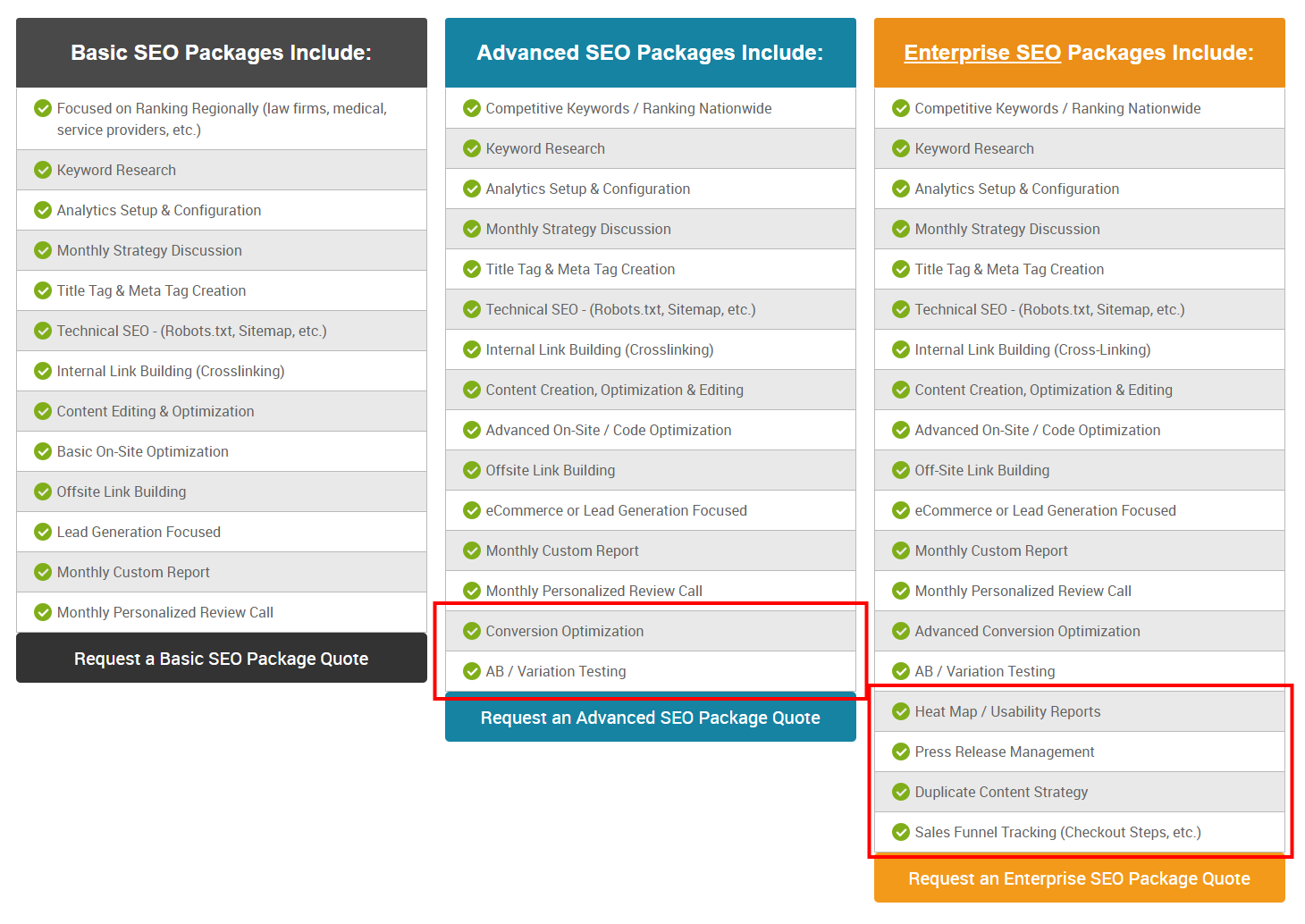
A foundational package may suit a smaller shop or a website that has not previously had structured SEO support. It often focuses on technical essentials, keyword mapping, key category pages and analytics setup.
Ongoing growth package
Ongoing support may include technical monitoring, content improvements, category and product optimisation, internal linking and regular reporting. The work should be prioritised according to the website’s needs, rather than delivered as a fixed list of tasks that may not be relevant.
Enterprise ecommerce SEO
Larger shops and marketplaces may need support with extensive product catalogues, international targeting, multiple teams and complex platform setups. Enterprise packages may include technical consulting, large-scale content planning and coordination with developers or merchandising teams.
How much do ecommerce SEO packages cost?
There is no single price for ecommerce SEO. Costs depend on factors such as:
- The number of products, categories and website sections
- The condition and complexity of the website
- The competitiveness of the industry
- The number of countries and languages targeted
- Whether content creation or digital PR is included
- How much implementation support is required
When comparing quotes, check whether they cover strategy, implementation, reporting and communication. A lower fee may cover recommendations only, while another proposal may include ongoing work with developers and content teams. The scope should be clear before work begins.
How to choose the right package
- Set clear objectives. Identify whether the priority is improving technical health, increasing visibility for key categories, supporting a product launch or growing sales from organic search.
- Check the proposed scope. Look for specific activities, deliverables and priorities, not just broad promises to “improve SEO”.
- Ask how work will be measured. Reporting should connect SEO activity with relevant outcomes and explain limitations in the data.
- Understand who implements recommendations. Find out whether the provider makes changes directly or supplies guidance for the business’s own team.
- Consider the platform. Shopify, WooCommerce, Magento and custom-built websites can each have different technical requirements.
- Review communication and timing. SEO often requires input from developers, writers and product teams, so responsibilities and approval processes should be agreed.
Warning signs to watch for
Be cautious of guaranteed rankings, promises of immediate results or claims of a secret method that bypasses search engine guidelines. SEO outcomes depend on many factors, including competition, site quality and implementation. A credible provider should explain its approach, avoid misleading tactics and set realistic expectations.
Also check that link-building methods are transparent and that any content recommendations are useful to customers. Large volumes of low-quality pages or links can create risk rather than sustainable growth.
Frequently asked questions
How long does ecommerce SEO take?
Timing varies according to the website, the changes required and the competitiveness of the market. Technical improvements may be implemented quickly, but it can take longer for search engines to process changes and for broader organic performance to develop. A provider should give realistic expectations rather than a guaranteed date.
Can SEO work with paid advertising?
Yes. SEO and paid advertising serve different purposes but can inform one another. Paid search data may help identify useful products or search terms, while SEO can build visibility for relevant searches over time.
Does every product need a unique description?
Not necessarily. The best approach depends on the number of products and the value of each page. Priority products and categories may benefit most from original, detailed content. Pages with little search or customer value may need a different treatment, such as consolidation or exclusion from indexing.
Is a one-off SEO audit enough?
An audit can provide a valuable plan, but its recommendations need to be implemented and reviewed. Websites change as products, platforms and search requirements evolve, so ongoing monitoring may be appropriate for many shops.
Choose a package built around the shop
The most effective ecommerce SEO package is one tailored to the website’s current condition and commercial priorities. It should combine sound technical foundations with useful content, thoughtful site structure and clear measurement. Before choosing a provider, compare the scope, implementation support and reporting, and make sure the proposed work is relevant to the shop’s customers as well as its search visibility.
7 Tips for Choosing the Right Ecommerce Website SEO Package
- Choose a package tailored to your store’s size and platform.
- Check that keyword research covers products and categories.
- Look for technical SEO, including site speed and crawl fixes.
- Ensure product pages get unique titles and descriptions.
- Ask for clear reporting on rankings, traffic and sales.
- Check that link-building methods are transparent and ethical.
- Avoid guarantees of instant rankings or sales.
Choose a package tailored to your store’s size and platform.
Choose an SEO package that reflects the size of your store and the platform it uses. A smaller shop may need help with core technical fixes and a handful of key category pages, while a large catalogue could require support with filters, duplicate URLs and product-page optimisation at scale. The platform matters too: Shopify, WooCommerce, Magento and custom-built sites each have different features and technical considerations. A tailored package focuses on the work your store actually needs, rather than charging for services that may not be relevant.
Check that keyword research covers products and categories.
Check that keyword research covers both product and category pages. Category keywords often reflect broader searches, while product keywords can target specific brands, models or features. Mapping relevant terms to the right pages helps shoppers find what they are looking for and reduces the risk of multiple pages competing for the same search.
Look for technical SEO, including site speed and crawl fixes.
When comparing ecommerce website SEO packages, check that technical SEO is included, particularly improvements to site speed and fixes that help search engines crawl your website effectively. Faster-loading pages can create a smoother shopping experience, while resolving issues such as broken links, blocked pages or inefficient site structures can help search engines discover and index important products and categories.
Ensure product pages get unique titles and descriptions.
Ensure every product page has a unique title and meta description that accurately reflects the item, rather than reusing generic or manufacturer-provided text across your shop. Include the product name and relevant details, such as its type, key feature or size, where they fit naturally. Distinct, helpful copy makes pages easier for shoppers to recognise in search results and helps search engines understand how each product differs.
Ask for clear reporting on rankings, traffic and sales.
Ask for clear, regular reporting that shows how your ecommerce SEO package is performing. Reports should cover relevant keyword rankings, organic traffic and, where tracking allows, sales and revenue from organic search. These measures help you understand whether greater visibility is attracting visitors and contributing to business goals. A good provider will explain what the figures mean, note any limitations and use the findings to guide the next steps, rather than relying on rankings alone.
Check that link-building methods are transparent and ethical.
When choosing an ecommerce SEO package, ask how any link-building will be carried out and where links are expected to come from. A reputable provider should explain its methods clearly, focus on earning relevant links through useful content and genuine outreach, and avoid buying links or using link schemes that could put your website at risk.
Avoid guarantees of instant rankings or sales.
Avoid ecommerce SEO packages that guarantee instant rankings or sales. Search performance depends on factors such as your website, competition, search engine changes and how quickly recommendations are implemented, so meaningful results usually take time. A trustworthy provider will explain its approach, set realistic expectations and report on progress using relevant measures, rather than promising outcomes it cannot control.